Instructor: John Mitchell
Course open to non-members, see registration details below.
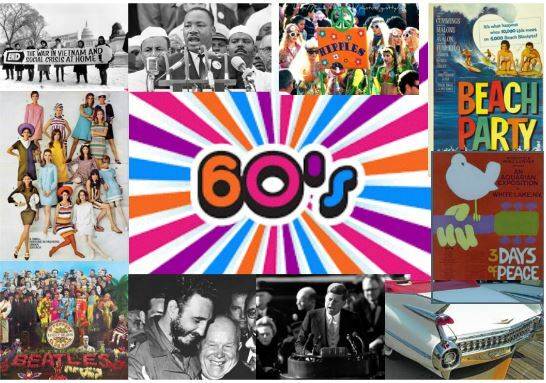
As we explore the music of the 60s, we’ll ask whether art–in this case music–changes society or merely reflects it. It was a decade of cultural and societal upheaval, and its soundtrack became the soundtrack of our lives. Was this just because the massive Baby Boomer audience lived and loved it, or was it truly great music?
Week 1- ROCK AND ROLL IS HERE TO STAY
WW2 ended and a tired and emotionally drained world wanted to put the horrors of war behind them and turn their attention to what was most important; home and family. Out of this came a young generation, eager to take advantage of a new peaceful world, with new technologies and a new optimism .....and they wanted their own music. As it happens, luckily, Blues and Jazz were making their way from Memphis and New Orleans, up the Mississippi to a more affluent North. As northern radio stations began to play so-called “race music,” kids began to dance to a new beat: Rock and Roll.
Week 2 - THE PEACEFUL TRANSITION
After several tragedies and legal missteps involving prominent rock-and-roll artists, popular music shifted toward a more polished, commercial style. Marketing focused increasingly on an artist’s appearance rather than the music itself, giving rise to the era of the “teen idol.” By the early 1960s, radio playlists had become softer and more conservative, with far less true rock and roll. Parents could relax as their teenagers tuned in to Connie Francis and Ricky Nelson—“safe” white teen idols with perfect smiles.
Week 3 - LET’S DANCE!
The early 1960s ushered in a wave of new sounds. Small groups of musicians began to write their own songs and play their own instruments. Surf music came out from California, the British Invasion brought “Swinging England” to North America, Soul music moved from Memphis into the mainstream, and a small Detroit label called Motown in Detroit started making a big impact on dance music. But things changed: JFK was assassinated and Russian Missiles in Cuba heated up the Cold War. The new music took our minds off these tensions.
Week 4 - THE TIMES THEY ARE CHANGING
By the mid-1960s, the Civil Rights movement was gaining strength and the anti–Vietnam War movement was taking hold. Protests often turned violent, and the world grew increasingly polarized. Popular music responded: it shed some of its early optimism, becoming more introspective and unmistakably political. Instead of asking “Do You Love Me?” the music of the moment asked, “How many roads must a man walk down?”
Week 5 - TURN ON, TUNE IN AND DROP OUT
In the latter part of the 1960s, demands for civil rights and for withdrawal from Vietnam grew ever more urgent. The era also saw rising tensions and episodes of violence surrounding demonstrations, and after the assassination of Martin Luther King Jr. in 1968, racial conflict erupted in cities such as Memphis and Detroit–ironically, places where music had long helped bridge racial divides. At the same time, the rise of LSD sparked a countercultural wave centred in San Francisco, urging a generation to “tune in, turn on, and drop out.”
Week 6 - REALITY BITES!
The 1960s began to lose their glow with the death of Meredith Hunter at the Rolling Stones’ Altamont concert in California—a moment often seen as the end of the era’s idealism. Music grew more aggressive and insistent as the country became increasingly polarized and weary of the Vietnam War. By 1970, when John Travolta strode down the street with two cans of paint, a new era—and a new sound—was on the horizon: disco. We’ll take a brief look at what 1970s music would become.